I live in bear country near Lake Tahoe – not scary bears, but black bears (Ursus americanus), who are really more like cuter, oversized raccoons. I give them lots of space when I encounter them because they are still wild animals even if they appear cuddly and friend-shaped. Mostly our bears seem far more interested in my garbage (which is locked securely in a bear box) than me. But living here made me curious about them, so I did a deep dive into their biology and learned some fascinating facts that got me thinking about ways we might try to be more like black bears. Yes, you read that correctly; I think there are ways we should consider being more like bears. But don’t worry, I am not suggesting that we knock over trash cans and eat garbage.
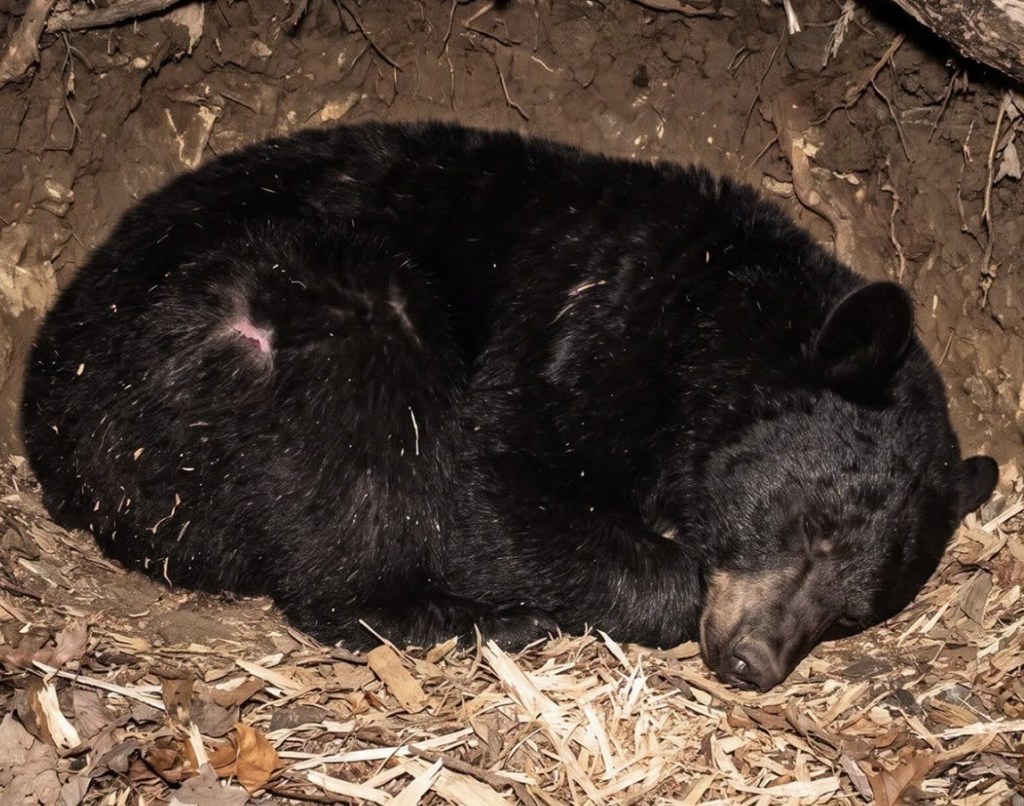
Most of the Tahoe bears do not truly hibernate in the traditional sense. Like Nevadan and Californian humans, our bears “do hibernation” their own special way. Some hibernate, though lightly and for a shorter time; others never go to sleep during winter, and still others will sleep for a bit, on and off, but come out to forage for food, usually if the weather gets warmer mid-winter. Another reason Tahoe bears don’t hibernate, or “den up,” as often as other bears is access to human food waste. Bears that live near residential and resort areas seem to sleep far less because they can simply get up and eat anytime. The “all you can eat” buffet is open 24/7. As you might imagine, this kind of food access creates the same problems for bears as it does for humans. Pregnant females seem to den up the most and for the longest period. Expectant moms, whether they are bears or humans, it seems, know when they need to rest. Tahoe bears listen to their bodies, sleep when they need to, eat when they need to, and generally go about living their lives as they see fit in the Sierra. I love that energy.
Another cool fact about black bears is the work they can do on their bodies during periods of hibernation, even during short sleeps. When they hibernate, bears enter a state of torpor; their heart rates and body temperatures drop, but they can still easily wake up if disturbed. While sleeping, they are able to heal wounds, prevent muscle and bone loss, and grow hair, all without eating or defecating, due to some very unique metabolic adaptations. These adaptations help the bear to streamline cellular efficiency, recycle protein by breaking down urea and using the leftover nitrogen to rebuild muscle proteins, and maintain a targeted immune response to control inflammation and ward off bacteria. Amazing! If you want to go deeper into the science of these adaptations, you can find more detail in the fascinating article titled “Wound healing during hibernation by black bears (Ursus americanus) in the wild: elicitation of reduced scar formation” by Paul A. Iaizo et al., March 2012.
Of course I know we humans can’t really hibernate or deploy metabolic adaptations to heal ourselves like black bears, but what if we actually gave ourselves proper time to rest? Could we rebuild and replenish our bodies and minds if we allowed ourselves meaningful rest, or sort of simply hibernated from time to time? We already know that sleep offers us many health benefits. Good sleep can heal our sick and tired bodies, sharpen our minds, and elevate our moods. Regular, consistent sleep lowers our risk of chronic diseases, boosts our immune systems, and improves memory consolidation. And yet, even with this knowledge, it remains challenging for many of us to get enough sleep. We tend to prioritize everything else in our lives over sleep and try “pushing through” even when we are exhausted and depleted. There even seems to be a certain amount of shame or stigma attached to resting, as if it’s a sign of weakness or a lack of productivity to allow ourselves to rest. Perhaps we can flip the script and view knowing when we need rest and then actually resting as a sign of strength.
So we know we should get more sleep, or at least better sleep, but how? How do we be more like bears and sleep when we need to in order to be better, healthier, and happier versions of ourselves? We can set and keep a regular sleep schedule that has a built-in routine for winding down and relaxing. We can reduce our caffeine and screen time, especially before bed. We can get outside into natural sunlight and fresh air daily to optimize our circadian rhythm function. We can exercise regularly and meditate to calm our racing, anxious minds. We can also take short naps during the day so that we don’t get overtired and irritable. The trick is not to nap so long that you feel foggy and groggy for the rest of the day or that it interferes with your nightly sleep pattern. I think babies and older adults have the right idea about naps. Turning off your power button, even for 10-15 minutes, can really help improve your mood and cognitive function.
Sleep can fix many things in our bodies and our minds. So the next time you feel tired, rundown, or sick, maybe stop for a moment and remember the Tahoe bears. Then try a little hibernating. Find a cozy, dark place away from noise and distraction and just rest a bit. Allow yourself the space to power down your body and mind. You will feel more rested, refreshed, and restored, I am certain. The bears know already know this, and we can benefit from their knowledge.


Leave a Reply